
VBIO

Gemeinsam für die Biowissenschaften

Werden Sie Mitglied im VBIO und machen Sie mit!

cOAlition S develops “Rights Retention Strategy” to safeguard researchers’ intellectual ownership rights and suppress unreasonable embargo periods

Logo PlanS

Publishers commonly require authors to sign exclusive publishing agreements which restrict what authors can do with their research findings, including making articles Open Access in line with their funders’ requirements. To address this problem, cOAlition S has developed a Rights Retention Strategy, which will empower their funded researchers to publish in their journal of choice, including subscription journals, and provide Open Access in compliance with Plan S.


One of the three Plan S routes to achieve full and immediate Open Access is via repositories, where, as a minimum, the Author Accepted Manuscript (AAM) is made openly available under a Creative Commons Attribution (CC BY) licence or equivalent, without any embargo.

The Rights Retention Strategy is designed to ensure that all cOAlition S funded scholarly publications are available as Open Access. In practical terms, it enables researchers to retain sufficient intellectual ownership rights in their work to make the AAM Open Access at the time of publication with a CC BY license. Read more

Debatte:

Der European Research Council (ERC)  hat sich bei der Umsetzung von Open Access von CoalitionS abgegrenzt, was die CoalitionS zu folgender Antwort veranlasst hat
 

weitere VBIO News
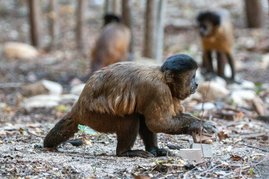
Dieser Kapuzineraffe knackt eine Cashewnuss mit "experimentellen Steinen". Dazu legt er die Nuss auf einen weichen Amboss und schlägt mit einem harten Hammerstein darauf.

Wilde Kapuzineraffen bevorzugen Steine, die sich beim Nüsseknacken bereits bewährt haben

Weiterlesen
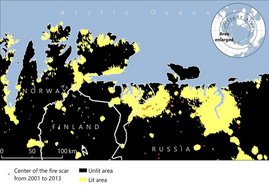
Grafik: Geografische Verteilung von Brandereignissen (rot) im Verhältnis zur durch menschliche Aktivitäten beleuchteten Fläche (gelb) in der europäischen Arktis 2001–2013.

Brandhäufigkeit in der Arktis durch menschliche Aktivitäten mehr als verdoppelt

Weiterlesen
Grafik

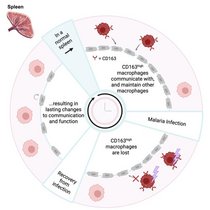
Malaria schädigt Fresszellen in der Milz dauerhaft

Weiterlesen