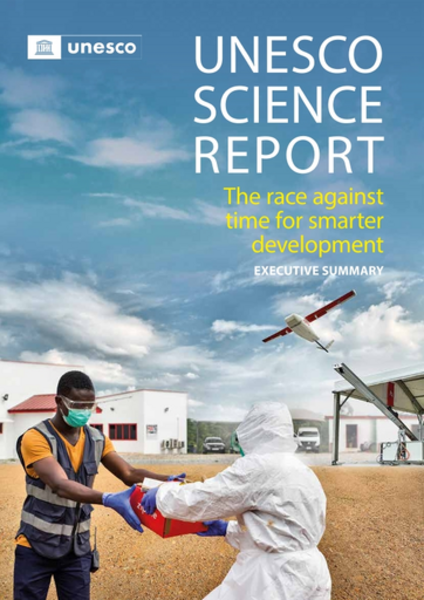
Every five years, the UNESCO Science Report provides an update of global trends in science governance. Written by 70 authors from 52 countries around the world, the latest edition in the series concludes that development priorities have aligned over the past five years. They may not all be at the same stage of development but countries of all income levels now envisage a future that is both digitally and ecologically smart.
Although development policies are increasingly aligned on this twin agenda, sustainability science is not attracting the same level of research attention as the Fourth Industrial Revolution. If we are to stand any chance of reaching our climate goals and those for sustainable development, the challenge will be to consider sectoral policies – for research, industry, energy, digitalization, health, education, agriculture, environment and so on – as a whole through the lens of sustainable development, rather than as separate entities advancing on parallel paths. The urgency of this change in perception is encapsulated in the UNESCO Science Report’s subtitle, ‘the race against time for smarter development’.
Today, four out of five countries in the world still invest less than 1% of GDP in research and development. The UNESCO Science Report calls for a substantial increase in investment in science to green their development model and conjugate growing crises which know no borders, such as climate change, biodiversity loss and health pandemics. Since the report spans the period from 2016 to early 2021, its coverage tracks the impact of the COVID-19 pandemic on global research and innovation.
(Euopean Commission/UNESCO)